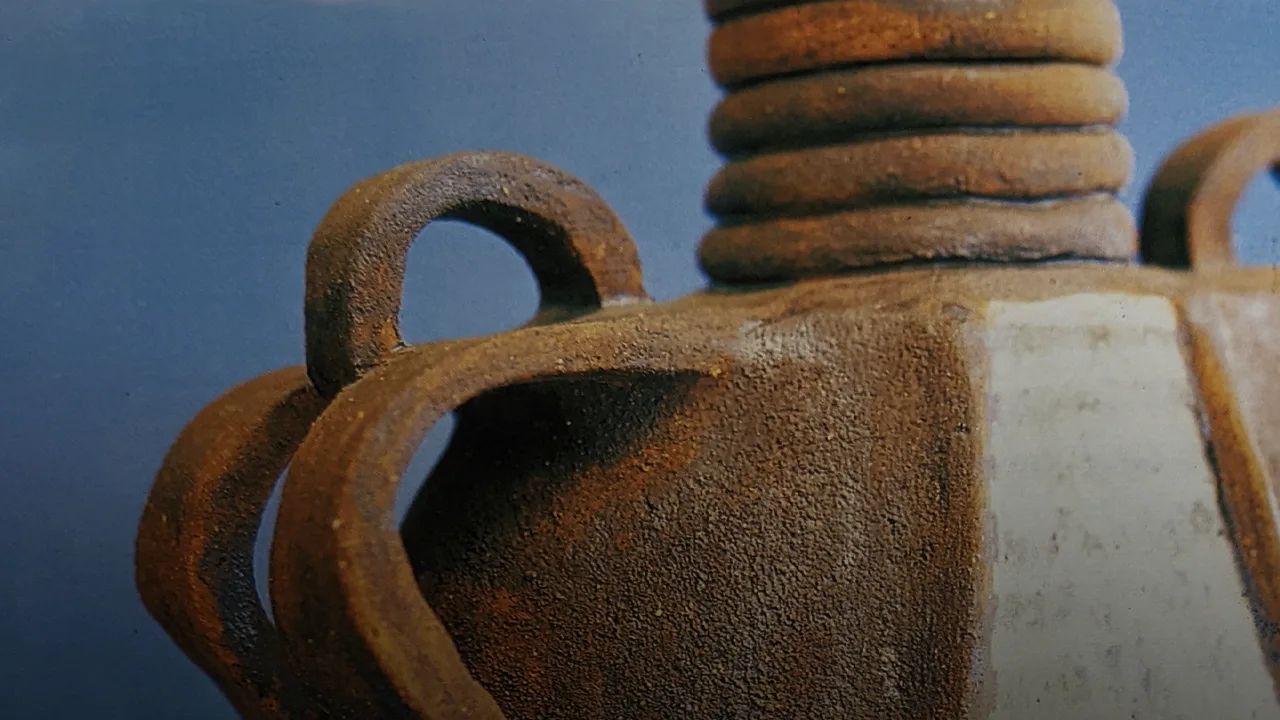
“For Diego Paredes, the highest artistic level in ceramics is the most personal and selfless one: the one that makes him feel alive, adventurous, and free; a true challenge with himself.” — Consuelo Viera
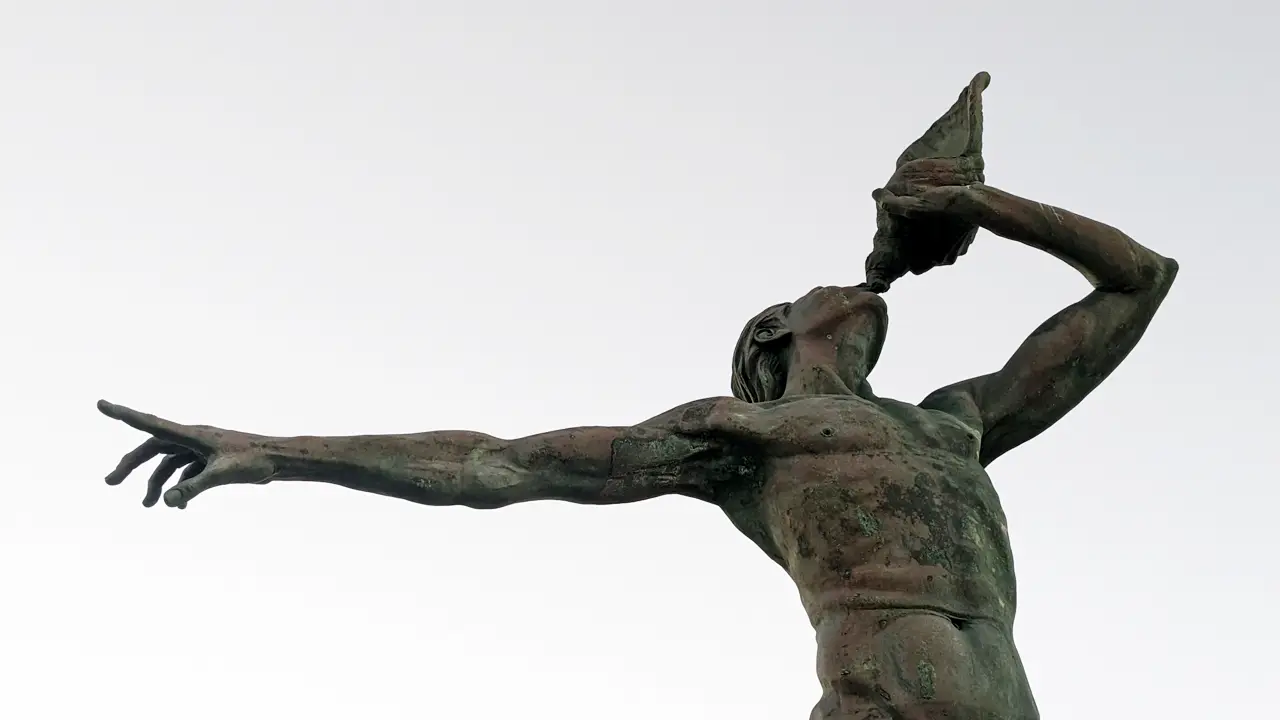
Landscape and memory: form as language in the Canary Islands
The Canary Islands archipelago is made up of eight main islands located in the Atlantic Ocean, off the coast of western Africa, and forms part of the Spanish autonomous community. This insular and volcanic territory has historically been a space of encounter, adaptation, and diverse cultural expression.
Before the conquest, the islands were inhabited by the indigenous Canarians, who, like many other ancient cultures, developed their own pottery techniques. Each island shaped its particular style according to the natural resources available, giving rise to distinctive forms, decorations, and uses that spoke of their environment.
For example, on the island of Gran Canaria, the remarkable pintaderas have been found: pre-Hispanic stamps made from clay, stone, or wood, engraved with geometric motifs. These objects are believed to have served ritual, identity-related, or decorative functions, and constitute a historical and cultural testimony of the Canary Islands.
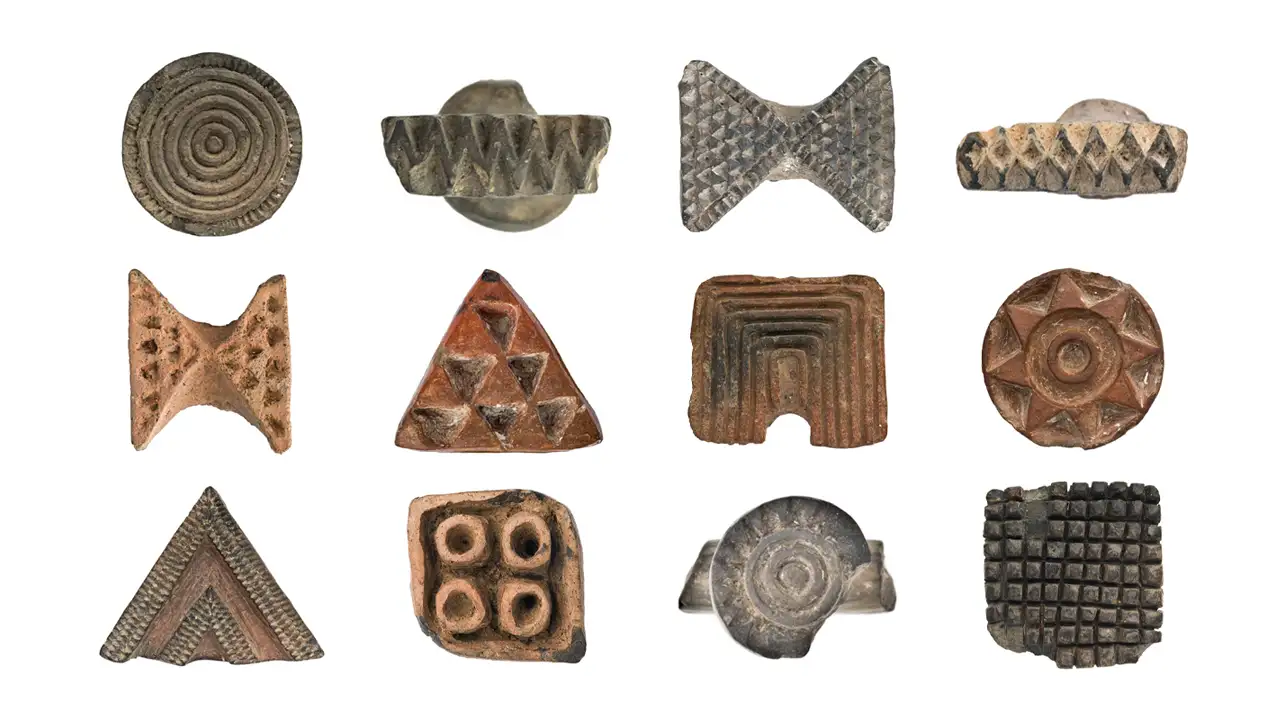
This ancestral visual language — made of forms and signs — still resonates in contemporary ceramics. The pintaderas are not merely archaeological remains, but also a tangible memory that inspires those who, like Diego Paredes, work through material to forge a connection with their artistic experience.
Diego Paredes’ ceramics
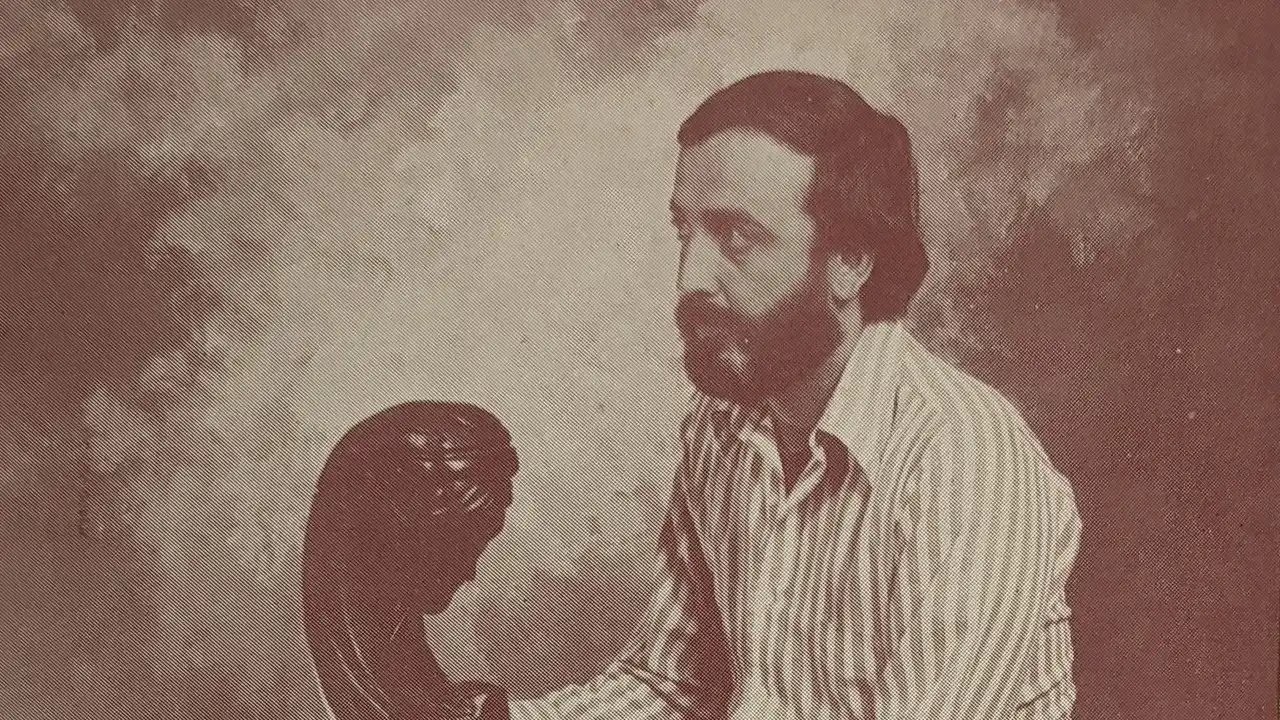
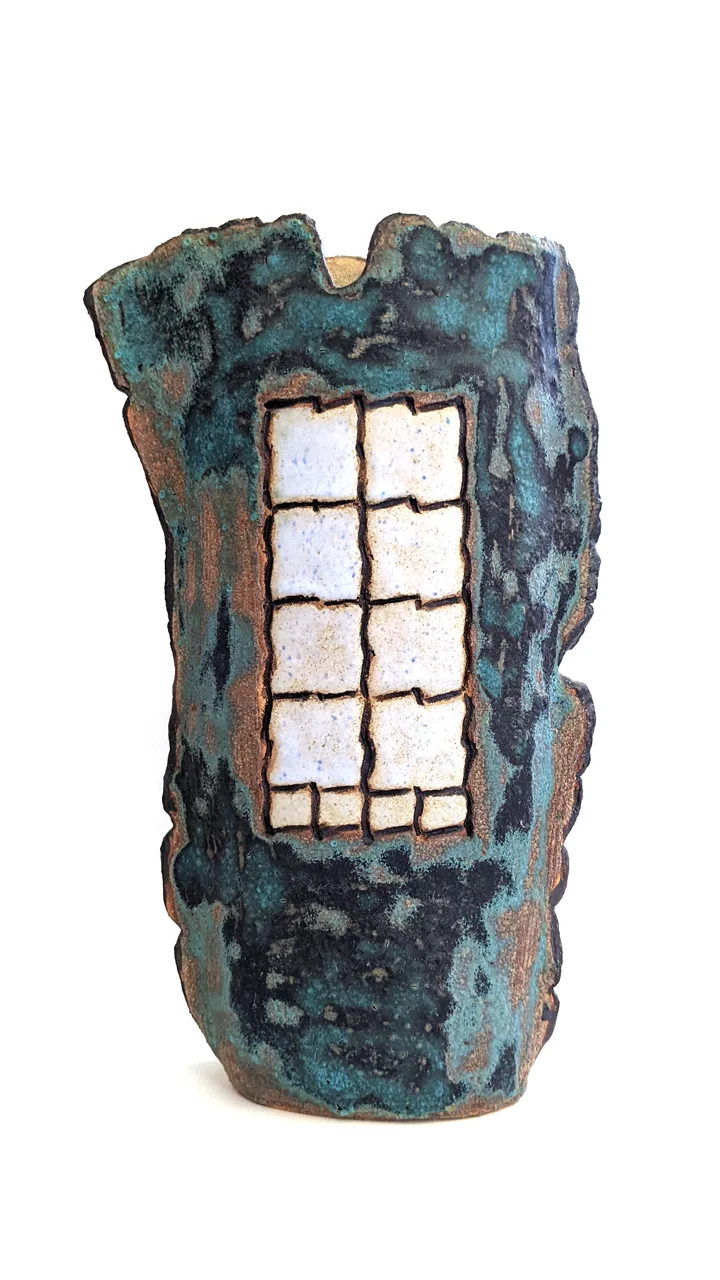
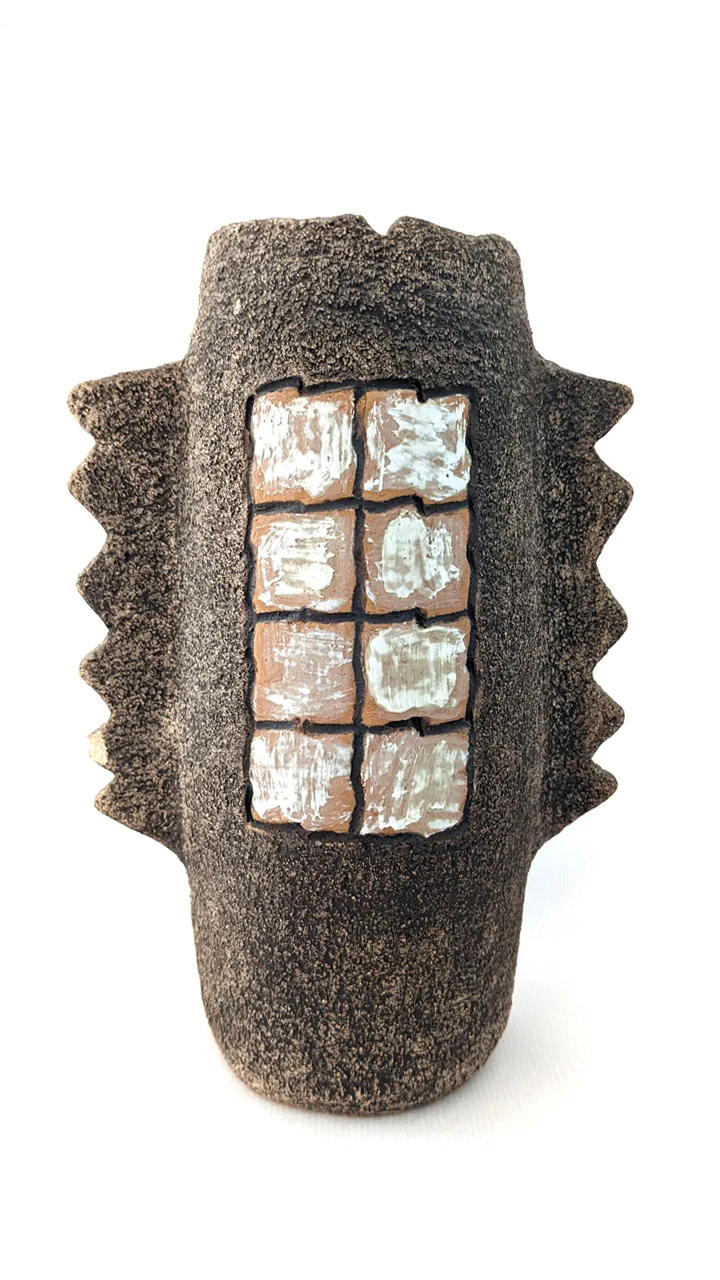
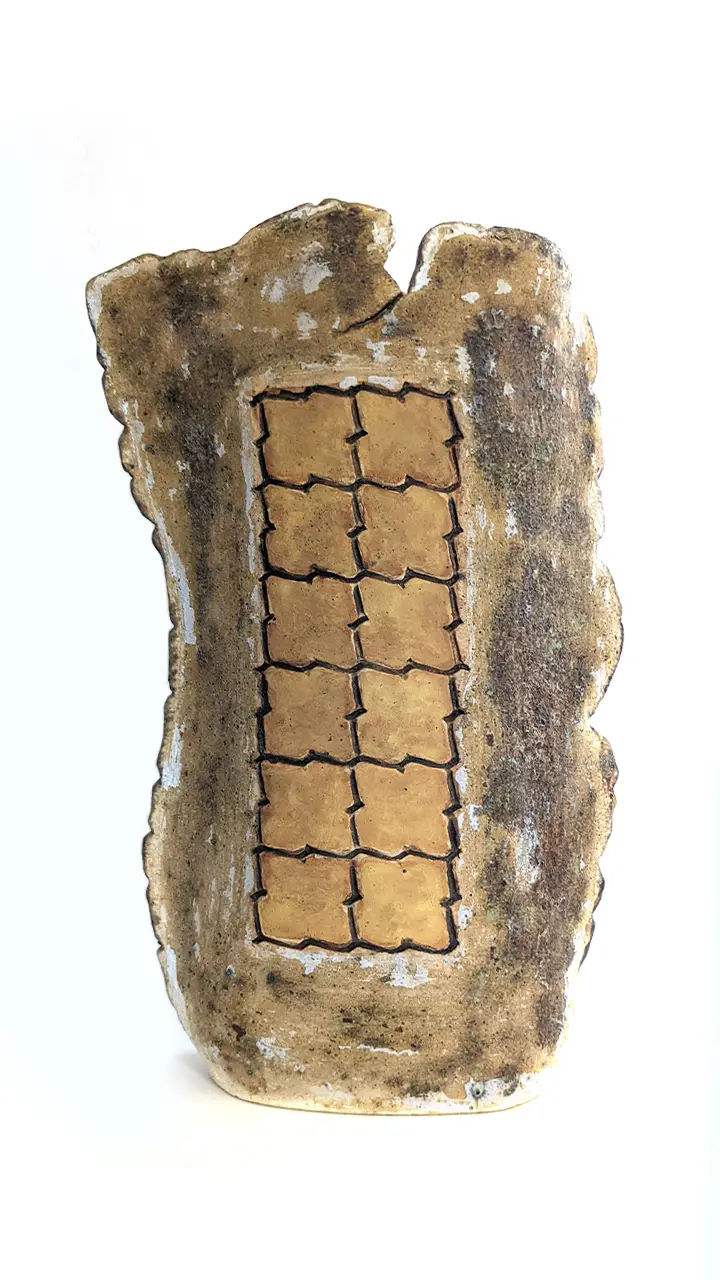
Just as the Canary Islands once communicated through pintaderas — which granted meaning and belonging — the direction Diego Paredes takes is not so different: his work also speaks through forms and textures. For him, the natural colours drawn from volcanic earth and the organic textures that clothe his pieces are essential elements in his sculptural process.
Restless and impatient, Diego Paredes has thoroughly explored the expressive possibilities of ceramics. In his work, materials are transformed into unique sculptures, deeply rooted in landscape and memory, making his surroundings a constant source of inspiration and raw material.
Fire sculptures and the Canarian volcanic landscape
The ceramic work of Diego Paredes can be read as a contemporary continuation of the visual legacy forged across the archipelago. In his sculptures, form does not merely respond to technique — it becomes a language: a way of shaping space, of thinking with the hands and expressing through matter.
Below is a selection of works by Diego Paredes, Canarian ceramicist and sculptor. If you are interested in acquiring any of his pieces, you can do so through our contact form.
Sources
- Canarian Amazigh ceramics / gobiernodecanarias.org
- The Pintaderas / gobiernodecanarias.org
- Catalogue of the pintaderas collection at El Museo Canario / elmuseocanario.com